DHT Blockers for Women: What Actually Works for Thinning Hair

DHT, short for dihydrotestosterone, is an androgen, a type of hormone often described as male but present in everyone. Your body makes it from testosterone using an enzyme called 5-alpha reductase. Women produce far less DHT than men, but they are not immune to its effects, especially when hormones shift.
Here is the part that matters for your hair. Certain hair follicles, usually along the part, the crown, and the temples, are genetically sensitive to DHT. When DHT binds to receptors on these follicles, it gradually shrinks them in a process called follicle miniaturization. Each growth cycle produces a slightly thinner, shorter hair than the last, until the follicle eventually produces only fine, barely visible strands, or stops producing altogether.
Unlike men, women rarely go completely bald. Instead, the classic pattern is diffuse thinning across the top of the scalp, a part line that widens like a Christmas tree, and a scalp that simply shows through more than it once did.
Pattern hair loss is extremely common. According to StatPearls (NCBI), roughly half of men show signs by age 50, and prevalence in women rises sharply after menopause as protective estrogen levels fall.
In women, raised DHT activity is usually tied to hormonal changes rather than sheer hormone volume. The common triggers are:
PCOS (polycystic ovary syndrome):
PCOS causes the ovaries to produce excess androgens, which raises DHT. Women with PCOS are about twice as likely to report pattern hair loss, according to a large US cross-sectional study in PLOS One.
Perimenopause and menopause:
As estrogen declines, the relative influence of androgens like DHT increases, which is why thinning often accelerates in the 40s and 50s.
Postpartum hormonal shifts:
The sharp hormonal drop after childbirth can trigger heavy shedding, sometimes layered on top of DHT-driven thinning.
Genetics:
Sensitivity to DHT is inherited. If close relatives have pattern thinning, your follicles may be more reactive to normal DHT levels.
High DHT does not announce itself directly, but it tends to show up through a cluster of signs. You do not need all of them, and only a doctor can confirm a hormonal cause, but these are the common ones:
Gradual thinning across the top of the scalp and a widening part
More shedding than usual, especially noticeable on the brush or in the shower
Hair that feels finer and does not grow as long as it used to
Excess facial or body hair (hirsutism), often linked to PCOS
Irregular periods or adult acne, which can point to an underlying hormonal imbalance
If you are seeing the hair signs alongside irregular cycles or acne, it is worth asking your doctor about PCOS or a hormonal workup, because treating the root cause matters as much as treating the scalp.
DHT blockers fall into two broad camps, and understanding the difference helps you choose sensibly.
1. 5-alpha reductase inhibitors:
These slow the enzyme that converts testosterone into DHT, so less DHT is produced in the first place. Finasteride is the prescription example. Several natural ingredients, including saw palmetto and rosemary oil, are thought to work partly through this same pathway, although more gently.
2. Androgen receptor blockers:
Rather than reducing DHT production, these limit DHT's ability to bind to receptors at the follicle. Spironolactone is the prescription example.
Topical serums add a practical advantage. By delivering actives directly to the scalp, they aim to influence DHT activity locally, around the follicles that need it, without acting throughout the whole body the way an oral pill does. That local approach is a large part of why drug-free topical serums have become the popular starting point for women who are not ready for prescription medication.
Finasteride:
Finasteride is the only DHT blocker the US Food and Drug Administration has approved for pattern hair loss, but that approval is for men. In women it is prescribed off-label, usually only for postmenopausal women, because it can cause birth defects if taken during pregnancy and is not advised while breastfeeding.
The evidence in women is limited but encouraging. A small study published in the International Journal of Trichology found that oral finasteride improved hair density in postmenopausal women with pattern hair loss, and a separate placebo-controlled trial found a low-concentration topical finasteride solution reduced shedding within six months. It works, but it requires a prescription and medical supervision.
Spironolactone:
Spironolactone is a once-daily pill that blocks androgen receptors, limiting DHT's effect at the follicle. It is commonly prescribed off-label for female pattern hair loss, especially when there are signs of high androgens such as PCOS. It is not suitable during pregnancy and requires monitoring, since it can raise potassium levels and affect the menstrual cycle.
Important
Prescription DHT blockers can be effective, but they are medical treatments with real contraindications. They are generally reserved for postmenopausal women or specific hormonal cases, and they always require a doctor's involvement. For many women, a gentler topical or natural route is the sensible first step.
Not every natural DHT claim holds up, but a handful of ingredients now have published clinical support. These are the ones worth looking for on a label.
Rosemary oil:
Rosemary oil is one of the most studied natural hair ingredients of the last decade. In a 2015 randomized trial, it produced hair-count gains comparable to 2% minoxidil over six months, with less scalp itching reported. It is thought to help inhibit 5-alpha reductase while improving scalp circulation.
Saw palmetto:
Saw palmetto is a botanical with antiandrogenic properties. A 2020 systematic review in Skin Appendage Disorders looked at five randomized trials and two cohort studies and found that about 60% of users reported better overall hair quality and roughly 83% showed increased hair density. A more recent 16-week placebo-controlled trial found a standardized saw palmetto oil reduced hair fall by up to 29% and increased density.
Caffeine:
Topical caffeine helps stimulate microcirculation at the scalp surface and, in laboratory studies, appears to counteract some of DHT's growth-inhibiting effect on follicles. It is a common supporting active in scalp serums rather than a standalone fix.
Peptides, biotin, and follicle complexes:
Biotin supports the keratin that gives hair its structure, peptides help condition the follicle environment, and patented complexes such as Redensyl target follicle stem cells. In the manufacturer's clinical study, Redensyl increased the share of hairs in the growth phase by about 9% and reduced resting-phase hairs by about 17% after 84 days. These ingredients are most effective combined, which is how the better serums are formulated.
Side effects depend heavily on whether you are using a prescription drug or a topical product.
Prescription options:
Finasteride is generally well tolerated, but possible side effects include headache, mood changes, and nausea, and it can slightly raise estrogen. It should be avoided by anyone pregnant, planning pregnancy, or with a personal or family history of breast cancer. Spironolactone can cause breast tenderness, increased urination, raised potassium, and menstrual changes.
Topical and natural options:
These are far gentler. The main risk is local scalp irritation or, rarely, an allergic reaction to a botanical. A patch test before first use is sensible if your scalp reacts easily. This favorable safety profile is the main reason many women start with a topical serum before considering medication.
We ranked these on the strength of the evidence behind their ingredients, how practical they are to use daily, the safety profile, and overall value. Topical, drug-free options are weighted higher for everyday use because they suit the widest range of women without a prescription.
Roota takes the top spot because it combines the best-evidenced natural DHT-blocking actives into a single, easy daily step. It is a plant-based roll-on that targets DHT at the scalp, supports dormant follicles, and is formulated for sensitive and color-treated hair, with no prescription and no drug dependency.
Why it ranks first: the formula is built around exactly the ingredients this guide flagged as evidence-backed. It uses rosemary oil (the active shown comparable to 2% minoxidil), a Redensyl and AnaGain follicle-reactivation complex, plus caffeine, biotin, and peptides for circulation and shaft strength. Rather than relying on one ingredient, it layers several mechanisms in one serum.
Key actives: Rosemary oil, Redensyl, AnaGain, caffeine, biotin, peptides.
Format: Precision roll-on, leave-in, non-greasy, once daily.
Best for: Women wanting a drug-free, evidence-led starting point for DHT-related thinning.
Guarantee: 90-day money-back guarantee.
Watch-outs: Results need consistency over about three months; exact ingredient concentrations are not publicly listed.
For a full breakdown of the formula, the ingredient evidence, and how it compares to minoxidil, read our complete Roota Hair Growth Serum review. You can also check the current offer on the official site.
Our verdict on #1
Roota is the most practical choice for most women because it puts the strongest natural DHT-blocking actives into one gentle daily roll-on, backed by a 90-day guarantee that removes most of the risk of trying it
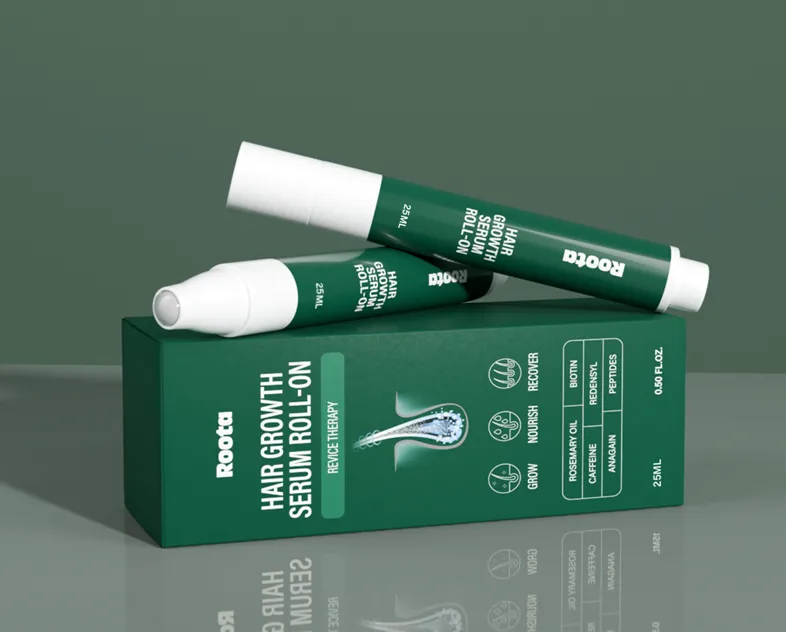
Trying any new hair product is a leap of faith, so Roota hair growth serum removes most of the risk. Use it for a full 90 days. If you do not see new growth and less daily shedding, you can request a full refund, and no returns are necessary. The manufacturer reports that hundreds of thousands of customers have started a Roota routine and rate it 4.8 out of 5.
Saw palmetto has the strongest standalone evidence of any natural DHT blocker, with multiple randomized trials behind it. A dedicated topical saw palmetto serum is a solid choice if you prefer a single, well-studied active rather than a blend. The trade-off is that you miss the circulation and follicle-reactivation support that a multi-active formula provides.
Key actives: Standardized saw palmetto extract
Best for: Women who want one evidence-backed ingredient, minimal formula
Watch-outs: Single-mechanism; quality and standardization vary widely between brands.
Pure rosemary oil treatments are inexpensive and supported by that well-known 2015 trial. Used consistently, they can help. The downside is practicality: undiluted essential oil must be mixed with a carrier oil, can feel greasy, and lacks the convenience and broader active profile of a finished serum.
Key actives: Rosemary essential oil (diluted in a carrier)
Best for: Budget-conscious users comfortable with a DIY routine
Watch-outs: Greasy if over-applied; needs dilution; single mechanism.
Low-concentration topical finasteride has the strongest clinical proof on this list, and delivering it to the scalp reduces the systemic exposure of the oral pill. But it is still a prescription drug, is generally limited to postmenopausal women, and must be avoided in pregnancy. It belongs here for effectiveness, but ranks below drug-free options for everyday accessibility.
Key actives: Finasteride (topical solution)
Best for: Postmenopausal women under medical supervision
Watch-outs: Prescription only; not for pregnancy or pre-menopausal women without precautions.
DHT-blocking shampoos containing ketoconazole, caffeine, or saw palmetto are the easiest thing to add to a routine, since they simply replace your normal shampoo. The catch is contact time: a shampoo rinses off in minutes, so it works best as a support act alongside a leave-in serum rather than as your primary treatment.
Key actives: Ketoconazole, caffeine, or saw palmetto
Best for: Adding a low-effort support step to an existing routine
Watch-outs: Short contact time limits impact; not enough on its own.
How to choose between them
If you want one practical, evidence-led product to start with, a multi-active topical serum like our #1 pick is the most sensible choice.
If you prefer a single studied ingredient, saw palmetto is the best-supported natural standalone.
If you have significant or rapid hair loss, see a dermatologist first, because prescription options or a combined plan may be more appropriate.
DHT is the main hormonal driver behind female pattern hair loss, and blocking or limiting it is a well-founded strategy. Prescription options work but suit a narrow group of women and need medical oversight. For most women, an evidence-led topical serum that combines rosemary oil, a follicle-reactivation complex, caffeine, and peptides is the most practical and lowest-risk way to start.
That is exactly why our top pick is Roota Hair Growth Serum: it brings the best-supported natural DHT-blocking actives together in one gentle daily roll-on, backed by a 90-day money-back guarantee. If you want the full ingredient breakdown and how it stacks up against minoxidil, read our complete review and buying guide.
Yes, the evidence supports them, though effect sizes vary. Prescription blockers like finasteride and spironolactone have the strongest clinical proof, while natural topical actives such as rosemary oil and saw palmetto have growing randomized-trial support. Consistency matters more than any single product, because hair grows in cycles and takes months to respond.
Saw palmetto has the strongest standalone clinical evidence among natural options, and rosemary oil is close behind. In practice, a serum that combines several evidence-backed actives, such as rosemary oil with a follicle-reactivation complex, tends to be more practical than relying on a single ingredient.
Plan for at least three months of consistent daily use before judging results, with earlier signs such as reduced shedding sometimes appearing within the first few weeks. Hair follicles cycle slowly, so patience is part of the process.
Generally yes. Topical and natural DHT blockers act mainly at the scalp and have a gentler safety profile, with local irritation being the main risk. Oral prescription blockers are effective but carry more systemic considerations and are usually limited to postmenopausal women under medical supervision.
In most cases yes, because topical serums act locally and do not typically interact with oral supplements. Many women layer a serum with supplements or alternate it with other treatments. If you use prescription medication, confirm with your doctor first.

Roota